 Authored by: Advocate Kishan Kumar (Advocate & Legal Consultant)
Alimony & Financial Settlement Calculation in India
Quick Legal Takeaways
- Monthly Benchmark (Kalyan Dey Chowdhury): 25% of the husband's net take-home salary is the standard judicial benchmark for monthly maintenance.
- Section 25 HMA Permanent Alimony: Governs lump-sum financial settlements awarded during divorce proceedings.
- Rajnesh v. Neha Mandate: Both spouses MUST submit sworn Income & Asset Affidavits attaching bank statements and IT returns.
- Remarriage Terminating Clause: Ongoing monthly alimony automatically terminates upon the recipient spouse's remarriage.
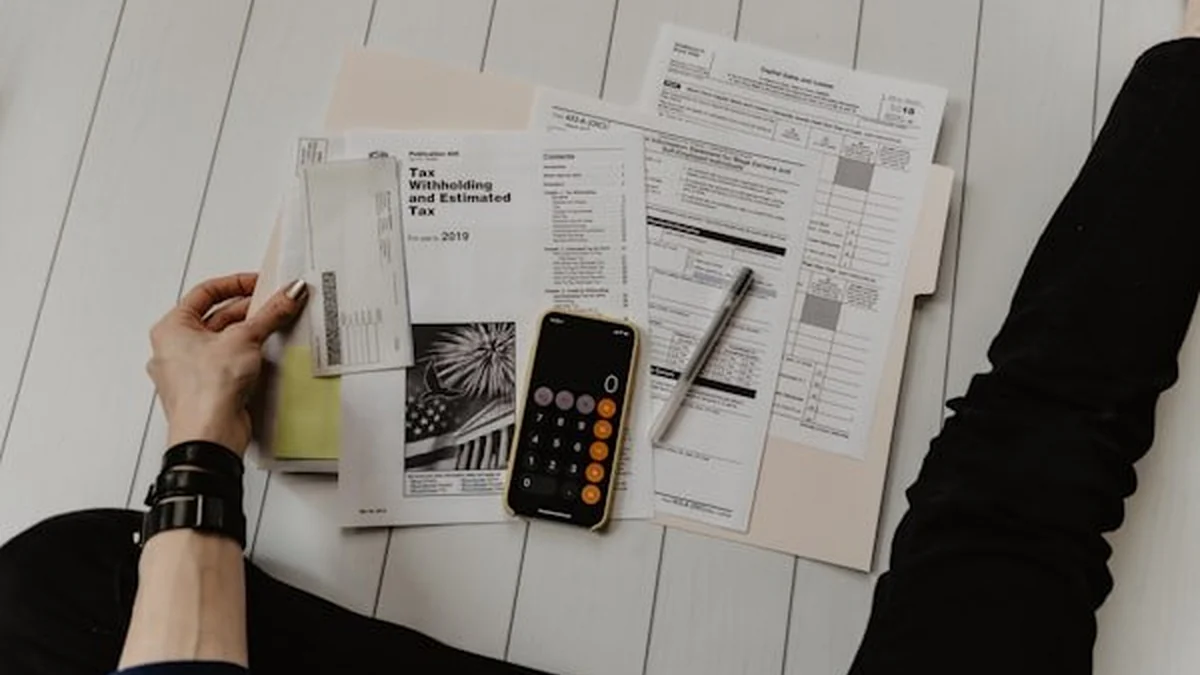
During matrimonial breakdown and divorce proceedings, determining monthly maintenance and Permanent Alimony under Section 25 of the Hindu Marriage Act or Section 144 of the Bharatiya Nagarik Suraksha Sanhita, 2023 represents one of the most critical and fiercely contested phases of family law litigation. Indian courts apply well-settled judicial benchmarks to ensure that the dependent spouse maintains a standard of living reasonably comparable to what was enjoyed in the matrimonial home.
1. Statutory Foundations: Maintenance vs. Permanent Alimony
Indian matrimonial jurisprudence provides distinct statutory avenues for financial support during and after marriage:
- Interim Maintenance (Pendente Lite) — Section 24, HMA: Designed to provide immediate financial support and litigation expenses to an indigent spouse during the active pendency of matrimonial litigation.
- Permanent Alimony & Maintenance — Section 25, HMA: Authorizes Family Courts, at the time of passing a decree of divorce or judicial separation (or anytime thereafter), to award a lump sum or periodic monthly payments for the applicant spouse's lifetime or until remarriage.
- Summary Maintenance — Section 144, BNSS, 2023 (formerly Section 125 CrPC): A summary, secular remedy providing monthly subsistence allowance for wives, minor children, and elderly parents unable to maintain themselves, preventing destitution and vagrancy.
- Monetary Relief — Section 20, Domestic Violence Act, 2005 (PWDVA): Broad emergency relief covering medical expenses, loss of earnings, and monthly maintenance for aggrieved women in domestic relationships.
- Comply with Rajnesh v. Neha Mandate: File a comprehensive, transparent Income & Asset Affidavit detailing bank accounts, IT returns, investments, and actual liabilities.
- Document Standard of Matrimonial Living: Compile bank statements, school fee receipts, household bills, and medical expense records to justify equitable support benchmarks.
- Track Interlocking Maintenance Awards: Disclose all parallel maintenance proceedings under Section 144 BNSS, Section 24 HMA, and Section 12 PWDVA to prevent overlapping liabilities.
2. The 25% Net Salary Benchmark: The Kalyan Dey Chowdhury Precedent
While the Hindu Marriage Act does not prescribe a rigid mathematical formula, the Supreme Court has laid down foundational percentage benchmarks for monthly maintenance:
The Supreme Court ruled that 25% of the husband's net take-home salary is a just and reasonable benchmark for awarding maintenance to the wife. Net take-home income is computed after deducting statutory liabilities like Income Tax, Provident Fund (PF), and mandatory deductions, while voluntary loan EMIs or personal luxury deductions cannot be used to artificially depress maintenance liability.
A landmark ruling by the Supreme Court establishing a comprehensive national framework for maintenance. The Court framed uniform guidelines: overlapping maintenance awarded under multiple statutes must be adjusted/set off; maintenance must be awarded from the date of filing the application; and both parties must mandatorily file detailed, sworn Affidavits of Assets and Liabilities.
The Supreme Court affirmed that child maintenance is independent of the mother's maintenance. Even if the mother is professionally employed and earning an independent salary, the father remains statutorily obligated to contribute proportionately to the child's school fees, healthcare, and higher education expenses.
3. Key Judicial Factors Evaluated by Family Courts
Under the Rajnesh v. Neha framework, Family Court judges evaluate the following multi-factorial criteria when calculating alimony:
- Status and Standard of Living: The social standing, lifestyle, and comforts enjoyed by the parties during the subsistence of the marriage.
- Actual Earning Capacity vs. Potential: If an educated spouse voluntarily chooses not to work, courts evaluate reasonable potential; however, merely possessing educational qualifications is not a ground to deny maintenance if the spouse has been out of the job market for childcare or domestic duties.
- Independent Income & Assets: Rental income, dividends, commercial investments, and ancestral property holdings of both parties.
- Financial Liabilities & Dependent Obligations: Genuine dependent elderly parents, dependent siblings, and mandatory statutory debts.
- Duration of Marriage: Marriages spanning decades typically attract higher lump-sum permanent alimony or lifelong monthly provisions compared to brief marriages of a few months.
4. Mandatory Affidavit of Assets & Liabilities (Rajnesh v. Neha)
Both spouses must execute a comprehensive affidavit on judicial stamp paper containing exhaustive financial disclosures:
- Income Disclosures: Salary slips for the last 12 months, Form 16, Income Tax Returns (ITR) with computation sheets for the last 3 financial years, and Profit & Loss statements for business owners.
- Banking & Financial Holdings: Full bank statements of all active accounts for the past 3 years, fixed deposits (FDs), mutual funds, shares, demat accounts, and PPF balances.
- Immovable Property Details: Residential plots, agricultural land, commercial shops, apartments, and co-owned ancestral shares.
- Movable Assets & Lifestyle Expenses: Motor vehicles owned, club memberships, credit card statements, domestic staff expenses, and foreign travel history.
- Child Expenses: Itemized breakdown of school tuition fees, coaching classes, medical insurance, and extracurricular expenses.
- Comply with Rajnesh v. Neha Mandate: File a comprehensive, transparent Income & Asset Affidavit detailing bank accounts, IT returns, investments, and actual liabilities.
- Document Standard of Matrimonial Living: Compile bank statements, school fee receipts, household bills, and medical expense records to justify equitable support benchmarks.
- Track Interlocking Maintenance Awards: Disclose all parallel maintenance proceedings under Section 144 BNSS, Section 24 HMA, and Section 12 PWDVA to prevent overlapping liabilities.
5. One-Time Lump Sum Settlement vs. Monthly Alimony
Matrimonial disputes resolved through mutual consent divorce (Section 13B HMA) frequently adopt a **One-Time Permanent Alimony Settlement** rather than recurring monthly maintenance:
- Lump-Sum Permanent Alimony: Provides complete, final closure ("clean break" doctrine). The husband pays a consolidated amount (or transfers immovable property) in full and final satisfaction of all past, present, and future claims. It eliminates repeated court execution petitions for monthly recovery.
- Taxability of Alimony in India: Under Indian Income Tax jurisprudence, a lump-sum capital receipt received as permanent alimony upon divorce is treated as a capital transaction and is tax-free in the hands of the recipient spouse. Conversely, recurring monthly maintenance payments are classified as revenue receipts and are taxable as "Income from Other Sources."
6. Remarriage, Cohabitation & Maintenance Termination Rules
The continuity of alimony is subject to statutory conditions under Section 25(3) of the Hindu Marriage Act:
- Remarriage of Recipient Spouse: If the spouse receiving monthly maintenance remarries, the paying spouse's obligation to pay monthly alimony terminates immediately from the date of remarriage. However, child maintenance obligations continue unabated until the child attains majority.
- Unchastity / Cohabitation: If the recipient spouse is living in an illicit relationship or has non-cohabited, the paying spouse can apply to the Family Court to rescind or modify the maintenance order.
- Change in Financial Circumstances: Under Section 25(2) HMA and Section 146 BNSS (old 127 CrPC), either party can seek enhancement or reduction of maintenance upon showing substantial changes in income, inflation, loss of employment, or major medical expenses.
7. Comparative Assessment Table: Maintenance & Alimony Statutes
| Parameter | Interim Maintenance (Sec 24 HMA) | Permanent Alimony (Sec 25 HMA) | Summary Maintenance (Sec 144 BNSS) | Domestic Violence Act (Sec 20 PWDVA) |
|---|---|---|---|---|
| Timing | During active pendency of HMA divorce petition | At or after passing of final divorce/separation decree | Anytime during marriage or after divorce | Anytime during or after domestic relationship |
| Nature of Relief | Monthly subsistence & litigation cost | Lump-sum capital payment or lifetime monthly support | Monthly subsistence allowance | Emergency monetary relief, rent & medical expenses |
| Who Can Claim | Either husband or wife without independent income | Either husband or wife | Wife, minor children, dependent elderly parents | Aggrieved woman / wife / live-in partner |
| Jurisdiction | Family Court / District Court | Family Court / District Court | Judicial Magistrate First Class (JMFC) / Family Court | Metropolitan / Judicial Magistrate Court |
| Enforcement | Order 21 CPC Execution / Property Attachment | Order 21 CPC Execution / Property Charge | Distress Warrant / Imprisonment up to 1 month per default | Section 31 PWDVA Breach of Protection Order Penalty |
8. Strategic Legal Strategy for Matrimonial Litigants in Faridabad & Delhi NCR
When navigating maintenance or alimony claims before Family Courts in Sector-12 Faridabad, Gurugram, or Delhi NCR, follow these critical litigation safeguards:
- Obtain Certified Bank Records via Court Subpoena: If a spouse suppresses business income or luxury expenditures, file an application under Section 94 BNSS (old 91 CrPC) or Order 11 CPC summoning bank statements, credit card logs, and GST returns.
- Document Incurred Child Expenses: Maintain fee slips, medical receipts, and tuition vouchers to justify enhanced child support allowances.
- Secure a Legally Binding Settlement Deed: In mutual consent divorce matters, ensure the MoU includes comprehensive waiver clauses, return of Stridhan items, custody visitation schedules, and explicit no-future-claim undertakings.
9. Frequently Asked Questions (FAQ)
Answer: Yes. Merely because the wife is earning does not automatically disentitle her to maintenance. If the husband's income is substantially higher, the court will award maintenance to bridge the disparity and ensure the wife maintains the lifestyle enjoyed during the marriage (Sunita Kachwaha v. Anil Kachwaha (2014) 16 SCC 715).
Answer: Under Section 24 and Section 25 of the Hindu Marriage Act, either spouse (husband or wife) can claim interim maintenance or permanent alimony if they prove physical disability, illness, or total absence of independent income while the other spouse possesses sufficient means.
Answer: In mutual consent divorce (Section 13B HMA), the parties mutually negotiate the permanent alimony amount based on the husband's net worth, duration of marriage, child custody allocations, and future living expenses. The court verifies that the settlement is voluntary and not coercive.
Answer: The wife can file an execution petition under Section 144(3) BNSS or Order 21 CPC. The court can issue salary attachment orders, attach bank accounts and immovable properties, issue non-bailable warrants (NBWs), and sentence the defaulting spouse to civil imprisonment.
Answer: A one-time lump-sum permanent alimony paid as a capital settlement is tax-exempt under the Income Tax Act, 1961. However, monthly periodic maintenance payments are treated as revenue receipts and are taxable under "Income from Other Sources."
Statutory Authorities & Legal References
- Hindu Marriage Act (Sections 13, 13B, 24, 25) & Special Marriage Act
- Domestic Violence Act, 2005 (PWDVA) & Section 144 BNSS
- Supreme Court Guidelines in Rajnesh v. Neha (2020) & Aditi alias Mithi v. Jitesh Sharma (2023)
- Case precedents reported in Supreme Court Cases (SCC), All India Reporter (AIR), and Punjab Law Reporter (PLR).
- e-Courts Services & National Judicial Data Grid (NJDG) procedural tracking guidelines.
Disclaimer: This article is published for educational and informational purposes only under the Advocates Act, 1961. It does not constitute formal legal advice or create an attorney-client relationship. For case-specific legal strategy, consult a qualified advocate.
Actionable Next Steps & Critical Legal Checklist
If you are facing an active legal dilemma regarding Maintenance & Financial Disclosure Checklist, execute these immediate procedural steps to protect your statutory rights:
- Comply with Rajnesh v. Neha Mandate: File a comprehensive, transparent Income & Asset Affidavit detailing bank accounts, IT returns, investments, and actual liabilities.
- Document Standard of Matrimonial Living: Compile bank statements, school fee receipts, household bills, and medical expense records to justify equitable support benchmarks.
- Track Interlocking Maintenance Awards: Disclose all parallel maintenance proceedings under Section 144 BNSS, Section 24 HMA, and Section 12 PWDVA to prevent overlapping liabilities.