 Authored by: Advocate Kishan Kumar (Advocate & Legal Consultant)
Child Adoption in India: CARA vs HAMA Procedure
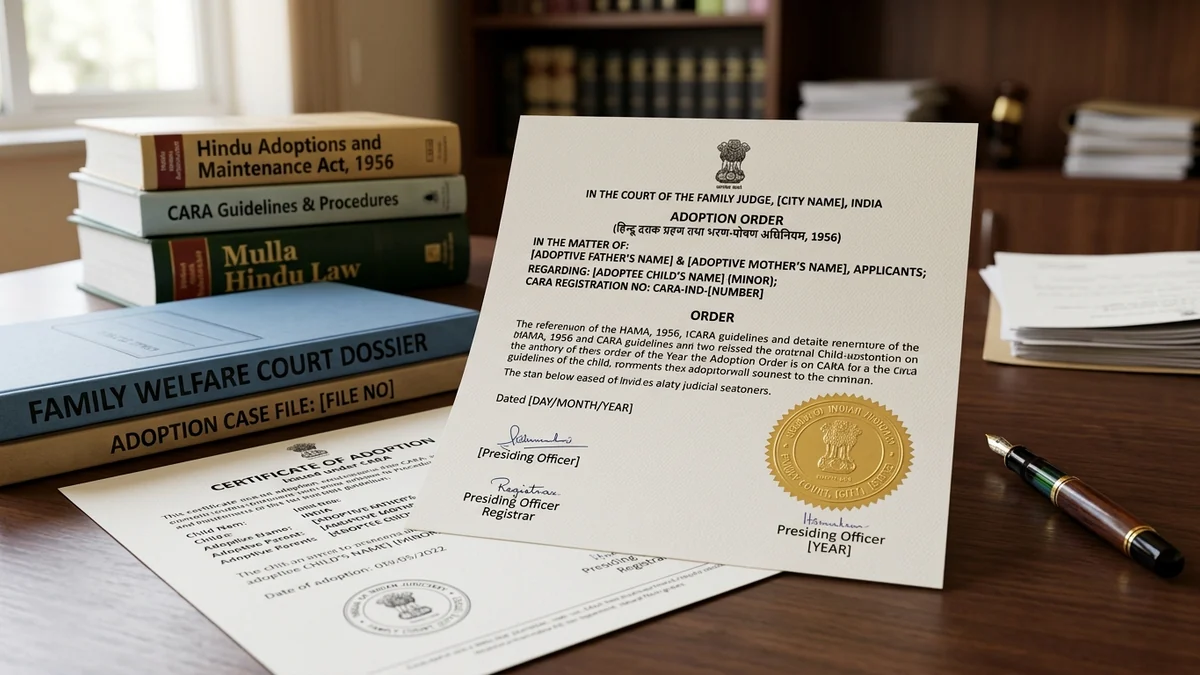
Quick Legal Takeaways
- Core Statutory Base: Exhaustive legal coverage under the latest 2024–2026 statutes and landmark judicial precedents.
- Practical Procedure: Detailed step-by-step litigation roadmap before District Courts, High Courts, and specialized tribunals.
- Evidence & Remedies: How to build watertight documentary trails and protect civil and personal liberties.
1. Dual Statutory Framework of Child Adoption in India
Child adoption in India is governed by strict statutory safeguards designed to protect the best interests and welfare of the child while preventing child trafficking, illegal buying/selling of infants, and fraudulent custody claims. Prospective Adoptive Parents (PAPs) in India navigate two primary, independent legal regimes:
- 1. The Juvenile Justice (Care and Protection of Children) Act, 2015 & CARA Regulations 2022: A secular, uniform adoption pathway open to Indian citizens, Non-Resident Indians (NRIs), Overseas Citizens of India (OCIs), and foreign nationals across all religions (Hindus, Muslims, Christians, Parsis, Sikhs). All institutional and inter-country adoptions must strictly proceed through the Central Adoption Resource Authority (CARA).
- 2. The Hindu Adoptions & Maintenance: A direct personal law framework applicable strictly to Hindus, Buddhists, Jains, and Sikhs for in-family relative adoptions, private giving-and-taking ceremonies (Datta Homam / physical handing over), and registered Adoption Deeds executed between biological and adoptive parents.
2. Adoption via CARA: Juvenile Justice Act 2015 & CARINGS System
CARA is the autonomous statutory body under the Ministry of Women and Child Development (MWCD) monitoring all domestic and inter-country child adoptions. The process is centralized and transparent through the CARINGS (Child Adoption Resource Information and Guidance System) online portal:
- Online Registration: Prospective Adoptive Parents (PAPs) register on the CARINGS portal (cara.wcd.gov.in) with basic KYC, medical certificates, financial solvency proofs, and marriage registration certificate.
- Home Study Report (HSR): A recognized Specialised Adoption Agency (SAA) or District Child Protection Unit (DCPU) conducts an extensive home inspection and psychological evaluation of the PAPs. The HSR is valid for 3 years.
- Child Referral & Seniority Matching: When a legally free child is matched based on online seniority and parental preferences (age category), PAPs view the Child Study Report (CSR) and Medical Examination Report (MER). Upon acceptance, the child is placed in pre-adoption foster care.
- Eligibility Criteria for PAPs:
- PAPs must be physically fit, financially sound, and highly motivated to adopt.
- A single female can adopt a child of any gender (male or female).
- A single male is statutorily barred from adopting a female child under Section 57(3) of the JJ Act.
- For married couples, at least 2 years of stable marital relationship is required, and both spouses must give written consent.
- The composite age of a couple adopting a child up to 2 years must not exceed 85 years (or 40 years for single parent).
3. The Landmark 2021 JJ Act Amendment: District Magistrate (DM) Adoption Orders
Prior to September 2022, adoption decrees required filing formal petitions before Family Courts / District Civil Courts, often taking 12 to 24 months due to heavy judicial backlogs. The historic enactment of the Juvenile Justice (Care and Protection of Children) Amendment Act, 2021 completely revolutionized adoption procedure in India:
Under the amended Section 61 of the JJ Act, the power to pass final Child Adoption Orders has been transferred from Civil/Family Courts exclusively to the District Magistrate (DM) and Additional District Magistrate (ADM). The statutory mandate requires the DM to examine the SAA petition, conduct in-camera hearings, and pass the final adoption order within 60 days of application filing, ensuring swift, child-centric legal finality.
4. Direct Adoptions under HAMA 1956: Statutory Rules & Registered Deed
Under the Hindu Adoptions & Maintenance, Hindus, Sikhs, Jains, and Buddhists can adopt directly without registering on the CARINGS portal, provided the adoption strictly satisfies mandatory statutory conditions under Sections 6 to 11 of HAMA:
- Capacity of Male (Section 7 HAMA): Any major male of sound mind can adopt. If married, written consent of the wife is mandatory unless she has renounced the world or been declared of unsound mind.
- Capacity of Female (Section 8 HAMA): An unmarried female, widow, or divorcee can adopt. A married female can adopt if the husband has renounced the world or ceased to be Hindu.
- Same Gender Restriction (Section 11(i) & (ii) HAMA): If adopting a son, the adoptive father/mother must not have a living Hindu son, grandson, or great-grandson. If adopting a daughter, they must not have a living Hindu daughter or granddaughter.
- The 21-Year Age Difference Rule (Section 11(iii) & (iv) HAMA): If a male adopts a female child, or a female adopts a male child, the adoptive parent must be at least 21 years older than the child. Failure to satisfy this age gap renders the adoption void ab initio.
- Mandatory Giving and Taking (Section 11(vi) HAMA): Physical transfer of the child from the biological parents/guardian to the adoptive parents with intent to transfer family lineage.
Under Section 16 HAMA, whenever an Adoption Deed is executed in writing and registered before the Sub-Registrar under the Registration Act 1908, the court draws a mandatory statutory presumption that the adoption complied with all legal formalities, placing the burden of proving invalidity on the challenging party.
5. Step-Parent Adoption & Relative Adoption Procedures
Two frequent adoption scenarios in Delhi NCR involve blended families and intra-family child care:
- Step-Parent Adoption (Section 56(2) JJ Act & CARA Regulations): Where a biological parent remarries, the step-parent can legally adopt the spouse's biological child. The process requires: (a) Consent of the other biological parent (or death certificate/sole custody court order); (b) Joint consent of both spouses; (c) Child's consent if aged 5+; and (d) Final Adoption Order issued by the District Magistrate.
- In-Family Relative Adoption: Relatives (paternal/maternal uncle, aunt, or grandparents) can adopt an orphaned or surrendered child. Under CARA Regulations 2022, relatives can complete the adoption via a simplified verification report submitted directly to the District Magistrate without extended waitlists.
6. Inter-Country Adoption & Hague Convention Compliance
India is a signatory to the Hague Convention on Protection of Children and Co-operation in Respect of Intercountry Adoption (1993). Inter-country adoptions by NRIs, OCIs, or Foreign PAPs are subject to stringent checks to eliminate illicit trafficking:
- Foreign Agency Coordination: PAPs must process their application through an Authorized Foreign Adoption Agency (AFAA) or Central Authority in their country of residence.
- CARA No-Objection Certificate (NOC): Once the Home Study Report is approved and child matched, CARA issues a statutory NOC.
- Passport & Visa Issuance: Following the DM Adoption Order, the Ministry of External Affairs issues an Indian Passport with an exit permit or foreign court conformation under Article 23 of the Hague Convention.
7. Inheritance, Coparcenary & Succession Rights of the Adopted Child
Under Section 12 of HAMA, 1956, the legal effects of a valid adoption are permanent and total:
- Complete Severance of Biological Family: From the date of adoption, all legal ties, succession rights, and coparcenary claims of the child in their biological family of birth are severed.
- Absolute Equal Coparcenary in Adoptive Family: The adopted child becomes a full legal heir and coparcener in the adoptive parents' family, possessing identical inheritance rights to self-acquired and ancestral property as any biological child under Section 8 of the Hindu Succession Act.
- Irrevocability of Adoption (Section 15 HAMA): A valid adoption cannot be cancelled by the adoptive parents, nor can the child renounce their adoptive status to return to their biological family.
8. Comparative Assessment Table: CARA (JJ Act 2015) vs. HAMA 1956
| Parameter | CARA Adoption (JJ Act 2015) | HAMA Adoption (HAMA 1956) |
|---|---|---|
| Applicable Religion | Secular (All religions: Hindu, Muslim, Christian, Parsi, Sikh) | Restricted strictly to Hindus, Buddhists, Jains, and Sikhs |
| Adoption Channel | Mandatory via CARINGS Portal & Specialised Adoption Agency | Direct between biological and adoptive parents / relatives |
| Decree Authority | District Magistrate (DM / ADM) within 60 days | Registered Adoption Deed before Sub-Registrar (Tehsil) |
| Same Gender Restriction | No restriction (Can adopt child of same gender as existing child) | Strict Bar (Cannot adopt son if living son exists; cannot adopt daughter if living daughter exists) |
| Single Male PAP | Can adopt male child only (Barred from adopting female child) | Can adopt female child if 21+ years older than child |
| Child Age Limit | Up to 18 years | Up to 15 years (unless custom permits older) |
9. Practical Legal Advisory for Prospective Parents in Faridabad & Delhi NCR
- Never Pay Private Intermediaries or Hospitals: Private financial adoption transactions are severe non-bailable criminal offences under Section 80 of the JJ Act, punishable with up to 3 to 5 years rigorous imprisonment.
- Always Register Adoption Deeds under HAMA: For in-family and relative adoptions, ensure the registered deed is witnessed by two independent witnesses and the physical handing over (giving and taking) is documented via date-stamped photographs.
- Update Birth Certificate & School Records: Following the DM order or registered deed, apply to the Municipal Corporation (e.g. MCF Faridabad / MCD Delhi) for issuance of a revised birth certificate naming the adoptive parents.
8. Frequently Asked Questions (FAQ)
Answer: Yes. Under both CARA (JJ Act 2015) and HAMA 1956, a single unmarried woman, widow, or divorcee can legally adopt a child of any gender (male or female), provided she satisfies financial solvency and age criteria.
Answer: Under CARA and Section 57(3) of the JJ Act 2015, a single male is statutorily barred from adopting a female child. Under HAMA 1956, a single male can adopt a female child only if he is at least 21 years older than the child.
Answer: Domestic adoption through CARA typically takes 12 to 24 months depending on the child's age group and online seniority queue. Once a child is matched, the final Adoption Order is issued by the District Magistrate within 60 days.
Answer: No. Under Section 12 of HAMA 1956 and JJ Act rules, upon legal adoption, all ties and inheritance rights of the child in their biological birth family are permanently severed, and replaced fully by inheritance rights in the adoptive family.
Answer: No. Under Section 15 of HAMA 1956, a valid adoption is completely irrevocable. Neither can the adoptive parents cancel the adoption, nor can the adopted child renounce their status to return to their birth family.
Statutory Authorities & Legal References
- Transfer of Property Act (Sections 53A, 54 Sale, Section 106 Tenancy)
- Registration Act, Indian Stamp Act & Haryana Stamp Rules
- Specific Relief Act (Section 16(c) Readiness and Willingness & Injunctions)
- Code of Civil Procedure (Order 39 Rules 1 & 2 Temporary Injunctions)
- Case precedents reported in Supreme Court Cases (SCC), All India Reporter (AIR), and Punjab Law Reporter (PLR).
- e-Courts Services & National Judicial Data Grid (NJDG) procedural tracking guidelines.
Disclaimer: This article is published for educational and informational purposes only under the Advocates Act, 1961. It does not constitute formal legal advice or create an attorney-client relationship. For case-specific legal strategy, consult a qualified advocate.
Actionable Next Steps & Critical Legal Checklist
If you are facing an active legal dilemma regarding Regulatory & Statutory Remedy Action Checklist, execute these immediate procedural steps to protect your statutory rights:
- Calculate Ad Valorem Court Fees & Interest: Compute statutory interest under HRERA Rules or Section 7(iv) Court Fees Act before filing claims.
- Observe 2-Year Consumer Limitation Window: File consumer forum complaints within 2 years from the date of cause of action under Section 69 Consumer Protection Act.
- Execute Court Decrees Under Order 21 CPC: If opponent defaults on judicial orders, initiate execution proceedings or contempt under Order 39 Rule 2A CPC.