 Authored by: Advocate Kishan Kumar (Advocate & Legal Consultant)
Urgent Stay Order: Order 39 CPC Against Demolition
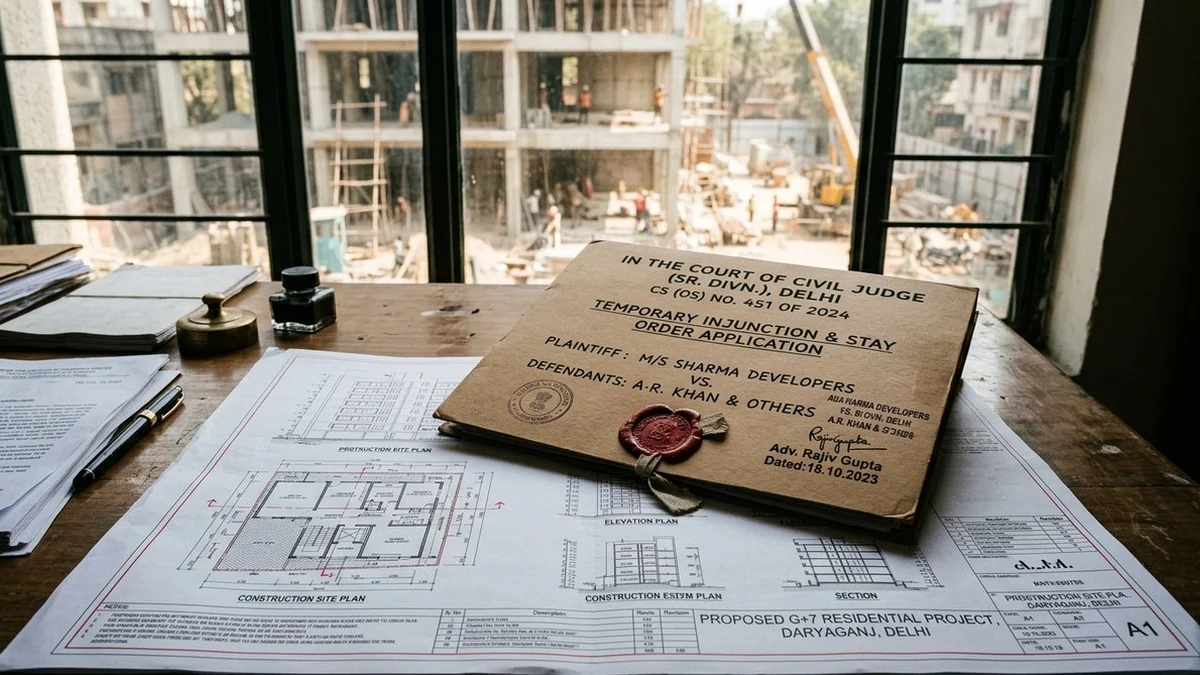 👉 In Plain Terms: An immediate court restraining order prohibiting the opponent from altering, constructing, or demolishing the property while trial proceeds.onerror=null; this.src='../images/blog/urgent-stay-order-order-39-cpc-injunction.webp';" src="../images/blog/urgent-stay-order-order-39-cpc-injunction.webp" width="1200"/>
Quick Legal Takeaways
- Core Statutory Base: Exhaustive legal coverage under the latest 2024–2026 statutes and landmark judicial precedents.
- Practical Procedure: Detailed step-by-step litigation roadmap before District Courts, High Courts, and specialized tribunals.
- Evidence & Remedies: How to build watertight documentary trails and protect civil and personal liberties.
1. The Three Golden Pillars for Granting an Urgent Temporary Injunction
When a property owner, residential plot holder, or commercial enterprise faces imminent threat of unauthorized demolition, illegal construction on shared land, or unlawful dispossession by land grabbers or municipal authorities, securing an Urgent Temporary Injunction (Stay Order) under Order XXXIX Rules 1 and 2 of the Code of Civil Procedure is the most critical civil emergency remedy.
To grant an interim stay order, the Civil Court must be convinced of the coexistence of Three Golden Principles established by the Supreme Court of India:
- 1. Strong Prima Facie Case: The plaintiff must show a bona fide legal right, valid title deeds, registered sale deed, or established legal possession over the suit property.
- 2. Balance of Convenience: The comparative mischief or inconvenience likely to arise from withholding the injunction will be greater than that which is likely to arise from granting it.
- 3. Irreparable Injury: If the injunction is refused, the plaintiff will suffer substantial physical damage or financial loss that cannot be adequately compensated in monetary damages (e.g., permanent demolition of a residential building or felling of ancestral trees).
2. Ex-Parte Ad-Interim Injunctions (Rule 3 Proviso): 24-Hour Emergency Protection
Normally, a court issues notice to the defendant before hearing an injunction application. However, in cases of extreme emergency — such as bulldozers arriving at the site or immediate threat of property transfer — the court possesses the power under the Proviso to Order 39 Rule 3 CPC to grant an Ex-Parte Ad-Interim Injunction without issuing prior notice to the defendant.
When an ex-parte stay order is granted under Order 39 Rule 3 CPC, the plaintiff must strictly comply with two statutory duties on the same day: (a) send copies of the plaint, application, affidavits, and stay order to the defendant by Registered Post / Speed Post, and (b) file a compliance affidavit in court on the same day or immediate next working day. Failure to comply can result in automatic vacation of the stay order.
3. Comprehensive Statutory Framework under CPC & Specific Relief Act
Injunction jurisprudence in India is governed by the synchronized application of the Code of Civil Procedure and the Specific Relief Act:
- Order XXXIX Rule 1 CPC (Preservation of Property): Grants injunctions where property in dispute is in danger of being wasted, damaged, alienated, or wrongfully sold in execution of a decree.
- Order XXXIX Rule 2 CPC (Restraining Breach of Contract / Injury): Grants injunctions to restrain the defendant from committing a breach of contract or other injury relating to property or rights.
- Order XXXIX Rule 2A CPC (Consequences of Disobedience): Prescribes strict penalties for violating stay orders — including civil imprisonment up to 3 months and attachment of the contemnor's property.
- Order XXXIX Rule 4 CPC (Application for Discharge / Variation): Allows the aggrieved defendant to apply for vacation or modification of an ex-parte stay order if obtained by misrepresenting facts.
- Section 37 & 38 Specific Relief Act: Governs temporary, perpetual, and mandatory injunctions on settled substantive civil rights.
4. Landmark Judicial Precedents on Stay Orders
The Supreme Court held that prima facie case alone is insufficient for grant of injunction. The court must be satisfied that irreparable injury and balance of convenience tilt heavily in favor of the plaintiff. Judicial discretion must be exercised with circumspection.
Laid down authoritative guidelines for granting ex-parte injunctions: (a) whether refusal would result in irreparable mischief, (b) whether the plaintiff's conduct was fair and honest, and (c) whether notice would cause delay defeating the very purpose of the suit.
Reiterated that interlocutory injunctions are aimed at maintaining the status quo of the subject matter until the final determination of rights, preventing the creation of third-party rights or alteration of property character.
5. Step-by-Step Roadmap: How to Obtain a Stay Order in District Courts
The practical procedure for securing an urgent stay order before the Civil Judge in Faridabad or Delhi NCR follows this sequence:
- Drafting Plaint & Interim Application: File a substantive Civil Suit for Permanent & Mandatory Injunction along with a separate Urgent Application under Order 39 Rules 1 & 2 CPC supported by a sworn affidavit.
- Urgent Listing Application: File an urgent listing application before the Senior Civil Judge / Duty Judge stating the pressing emergency (demolition notice, construction activity, or land encroachment).
- Filing Evidentiary Proof of Title & Possession: Tender registered sale deeds, Record of Rights (Jamabandi) / Mutation (Intiqal) (mutation) records, electricity bills, house tax receipts, and timestamped photographs/videos showing current status.
- Arguing Interim Relief & Local Commissioner Appointment: Argue the application for ex-parte stay. If the defendant is altering boundaries, move an application under Order XXVI Rule 9 CPC for appointment of an Advocate Local Commissioner (LC) to inspect the site and submit a spot report.
- Service of Injunction Order & Police Assistance: Serve certified copies of the stay order on the defendant, local police station, and Municipal Corporation (MCF) to ensure compliance. If violated, move an application under Section 151 CPC for police assistance.
6. Comparative Assessment Table: Injunction Types & Remedies
| Parameter | Temporary Injunction (Order 39) | Status Quo Order | Permanent Injunction (Sec 38 SRA) |
|---|---|---|---|
| Duration | Until disposal of suit or further orders | Until next date of hearing | Permanent decree concluding trial |
| Hearing Required | Ex-parte or after notice | Usually granted at initial stage | Only after full trial & evidence |
| Scope of Relief | Restrains specific acts (demolition, sale) | Freezes current physical position | Final conclusive restraint on defendant |
| Disobedience Penalty | Order 39 Rule 2A CPC (Jail / Attachment) | Order 39 Rule 2A CPC / Contempt | Execution under Order XXI Rule 32 CPC |
7. Strategic Legal Advisory for Property Owners in Faridabad & NCR
- Act at the First Sign of Encroachment: Never wait until physical construction is completed. Courts are reluctant to demolish finished structures through interim stay orders, preferring status quo on existing status.
- Always Pray for Appointment of a Local Commissioner: An independent court commissioner's report showing current spot reality eliminates conflicting claims about who is in actual physical possession.
- Serve Notice to Municipal Authorities under Section 80 CPC / Municipal Acts: If seeking a stay against municipal demolition, ensure mandatory pre-suit statutory notices are complied with or seek urgent exemption under Section 80(2) CPC.
8. Frequently Asked Questions (FAQ)
Answer: In genuine emergencies (such as illegal demolition or boundary wall construction), an ex-parte ad-interim stay order under Order 39 Rule 3 CPC can be obtained on the same day or within 24 hours of filing the suit before the Civil Judge in Faridabad or Delhi NCR.
Answer: Under Order 39 Rule 2A CPC, willful disobedience of an injunction or stay order is punishable with civil imprisonment for up to 3 months, attachment of the violator's property for up to 1 year, and demolition of any unauthorized structure erected in violation of the order.
Answer: Yes. While municipal corporations have statutory powers to remove unauthorized construction, courts will grant stay orders if the authority acts without issuing a mandatory show-cause notice, violates principles of natural justice, or targets legally sanctioned structures.
Answer: A stay order specifically restrains a party from performing a particular act (e.g., restraining demolition, stopping sale to third parties). A status quo order directs both parties to maintain the existing physical and legal condition of the property without making any changes whatsoever.
Answer: Under Order 39 Rule 3 CPC, the plaintiff must deliver copies of the application, plaint, and stay order to the defendant on the same day by registered post and file a compliance affidavit. Failure to strictly comply can lead to automatic vacation of the stay order on application by the defendant under Order 39 Rule 4 CPC.
Statutory Authorities & Legal References
- Transfer of Property Act (Sections 53A, 54 Sale, Section 106 Tenancy)
- Registration Act, Indian Stamp Act & Haryana Stamp Rules
- Specific Relief Act (Section 16(c) Readiness and Willingness & Injunctions)
- Code of Civil Procedure (Order 39 Rules 1 & 2 Temporary Injunctions)
- Case precedents reported in Supreme Court Cases (SCC), All India Reporter (AIR), and Punjab Law Reporter (PLR).
- e-Courts Services & National Judicial Data Grid (NJDG) procedural tracking guidelines.
Disclaimer: This article is published for educational and informational purposes only under the Advocates Act, 1961. It does not constitute formal legal advice or create an attorney-client relationship. For case-specific legal strategy, consult a qualified advocate.
Actionable Next Steps & Critical Legal Checklist
If you are facing an active legal dilemma regarding Property Protection & Tenancy Eviction Checklist, execute these immediate procedural steps to protect your statutory rights:
- Verify Title & Circle Rate Valuation: Conduct encumbrance searches across Book-1 records at the Sub-Registrar office and verify Section 47A circle rate valuations.
- Serve Statutory Eviction Notice: Issue a formal termination notice under the Haryana Urban Rent Control Act or Section 106 TPA detailing statutory eviction grounds.
- Seek Urgent Demolition / Encroachment Stay: File for an ad-interim injunction under Order 39 Rules 1 & 2 CPC with site photographs, demarcation reports, and title deeds.