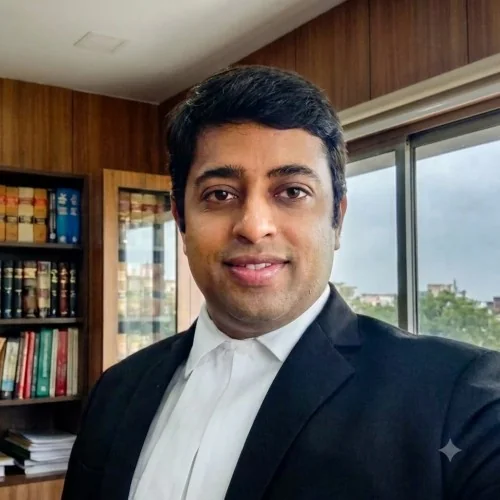
 Authored by: Advocate Kishan Kumar (Advocate & Legal Consultant)
Recover Money Lent Without a Written Agreement
Quick Legal Takeaways
- Oral Contract Enforceability (Sec 10 Contract Act): Oral loan agreements are legally valid. Written contracts are not mandatory to enforce debt recovery.
- Digital Proof (BSA 2023): UPI/NEFT bank statements, audio recordings, and WhatsApp chat logs certified under Section 63 BSA 2023 serve as strong proof.
- Fast-Track Civil Remedy: File a Summary Suit under Order 37 CPC before the Civil Judge Senior Division.
- 3-Year Limitation: Recovery suits MUST be filed within 3 years from the date loan was given or debt acknowledged.

Lending money to friends, relatives, or business associates based on personal trust is common. However, when the borrower defaults or denies the debt, lenders worry that the lack of a formal written loan agreement prevents legal recovery. Under Indian law, oral contracts and digital evidence are legally enforceable.
- Review Dispute Resolution & Notice Clauses: Examine contractual cure periods, limitation provisions, and mandatory pre-institution mediation requirements.
- Serve Detailed Advocate Legal Notice: Detail specific contractual breaches, calculation of liquidated damages, and compliance timelines before litigation.
- Adhere to POSH & Employment Directives: Ensure Internal Committee (IC) inquiry procedures strictly comply with natural justice and statutory 90-day inquiry timelines.
1. Key Evidentiary Documents to Prove Informal Loans
To win a civil money recovery suit without a written agreement, you can rely on documentary and electronic evidence under the Bharatiya Sakshya Adhiniyam, 2023:
- Bank Account Statements (UPI / NEFT / IMPS): Official bank transaction logs showing direct transfer of funds from your account to the borrower's account.
- WhatsApp Chats & Text Messages: Electronic chat logs where the borrower acknowledges receiving funds or promises repayment date, certified under Section 63 BSA 2023 certification rules.
- Audio Call Recordings: Recorded telephonic conversations where the borrower admits the debt liability.
- Third-Party Witness Testimony: Statements of independent witnesses present when money was handed over or discussed.
The Supreme Court affirmed that an oral agreement is valid and legally enforceable in India, provided the essential elements of a contract under Section 10 of the Indian Contract Act are established through credible evidence.
2. Fast-Track Civil Remedy: Summary Suit (Order 37 CPC)
If the borrower issued a security cheque that bounced, file a Section 138 NI Act complaint. Alternatively, file a Summary Suit under Order 37 of the Code of Civil Procedure before the Civil Judge Senior Division for fast-track recovery based on bank transfers and written acknowledgments.
3. Mind the 3-Year Limitation Period
- Review Dispute Resolution & Notice Clauses: Examine contractual cure periods, limitation provisions, and mandatory pre-institution mediation requirements.
- Serve Detailed Advocate Legal Notice: Detail specific contractual breaches, calculation of liquidated damages, and compliance timelines before litigation.
- Adhere to POSH & Employment Directives: Ensure Internal Committee (IC) inquiry procedures strictly comply with natural justice and statutory 90-day inquiry timelines.
4. Statutory Framework for Recovering Informal Loans
Recovering money lent without a formal written agreement relies on establishing a legally enforceable debt through indirect documentary and digital evidence:
- Indian Contract Act (Section 10 & 25): A verbal agreement to repay a loan constitutes a valid contract if supported by lawful consideration. The lender must prove: (a) money was advanced; (b) a promise to repay was made; and (c) the borrower has defaulted.
- Bharatiya Sakshya Adhiniyam, 2023 (Sections 61 & 63): WhatsApp messages, SMS texts, bank transfer screenshots, UPI transaction records, and call recordings are admissible as electronic evidence when accompanied by a Section 63 BSA certificate.
- Order XXXVII CPC (Summary Suit): Where debt is acknowledged in writing (even via WhatsApp), lenders can file a Summary Suit for expedited decree without full trial.
- Section 18 Limitation Act: If the borrower acknowledges the debt in writing (including text messages) before the limitation period expires, the limitation clock resets from the date of acknowledgment.
5. Evidence Building Strategy Without Written Agreement
NEFT/RTGS/UPI transfer records with the borrower's name and account number create a strong presumption of money advanced. Courts treat these as primary documentary evidence under BSA 2023.
Messages where the borrower acknowledges the debt, requests more time, or promises to repay serve as electronic admissions. Under Anvar P.V. v. P.K. Basheer (2014), such evidence must be accompanied by a proper Section 63 BSA certificate.
Persons present when the money was handed over can testify as oral witnesses. While weaker than documentary evidence, corroborative witness testimony strengthens the lender's case.
6. Step-by-Step Loan Recovery Procedure
- Send Legal Notice (Section 80 CPC): Formal demand notice via RPAD specifying the amount lent, date of transfer, and 15-day deadline for repayment.
- File Civil Suit for Money Recovery: Institute a regular civil suit or Summary Suit (Order XXXVII CPC) before the Civil Judge with bank statements, digital communications, and witness affidavits.
- Apply for Interim Attachment (Order 38 Rule 5 CPC): If the borrower is likely to dispose of assets, seek pre-judgment attachment of bank accounts and property.
- Execution of Decree (Order 21 CPC): Upon winning the decree, proceed with salary attachment, bank account garnishment, or property auction.
7. Comparative Table: Loan Recovery Remedies
| Parameter | Civil Suit (Regular) | Summary Suit (Order XXXVII) | Mediation / Lok Adalat |
|---|---|---|---|
| When to Use | No written acknowledgment available | Debt acknowledged in writing/text | Both parties willing to negotiate |
| Timeline | 18 - 36 Months | 6 - 12 Months | 1 - 3 Months |
| Court Fee | Ad-valorem on claim | Ad-valorem on claim | Nil |
| Interest Awarded | 6% - 12% per annum | 6% - 18% per annum | As agreed by parties |
8. Practical Advisory for Lenders in Faridabad & Delhi NCR
- Always Transfer Digitally: Never hand over cash without a receipt. Bank transfers create an automatic evidentiary trail.
- Get a Written Acknowledgment: Even a WhatsApp message saying "I will return Rs. X by [date]" is powerful legal evidence.
- Act Within Limitation: File suit within 3 years of the loan becoming due (Article 22, Limitation Act). After 3 years, recovery becomes time-barred.
9. Frequently Asked Questions (FAQ)
Answer: Yes. Indian courts regularly entertain money recovery suits based on bank transfer records, UPI/NEFT transaction statements, WhatsApp acknowledgments, and witness testimony. Under BSA 2023, electronic evidence with proper Section 63 certification is fully admissible to prove informal loans.
Answer: Under Article 22 of the Limitation Act, a suit for money lent must be filed within 3 years from the date the loan becomes due. If the borrower acknowledges the debt in writing (including text messages) before expiry, Section 18 of the Limitation Act resets the clock.
Answer: Yes. Bank statements showing the transfer to the borrower's account constitute strong primary evidence. Even if the borrower denies the transaction, the court can summon bank records under Order 11 CPC (Discovery) to verify the fund flow. The burden shifts to the borrower to explain why the money was received.
Statutory Authorities & Legal References
- Transfer of Property Act (Sections 53A, 54 Sale, Section 106 Tenancy)
- Registration Act, Indian Stamp Act & Haryana Stamp Rules
- Specific Relief Act (Section 16(c) Readiness and Willingness & Injunctions)
- Code of Civil Procedure (Order 39 Rules 1 & 2 Temporary Injunctions)
- Case precedents reported in Supreme Court Cases (SCC), All India Reporter (AIR), and Punjab Law Reporter (PLR).
- e-Courts Services & National Judicial Data Grid (NJDG) procedural tracking guidelines.
Disclaimer: This article is published for educational and informational purposes only under the Advocates Act, 1961. It does not constitute formal legal advice or create an attorney-client relationship. For case-specific legal strategy, consult a qualified advocate.
Actionable Next Steps & Critical Legal Checklist
If you are facing an active legal dilemma regarding Commercial Contracts & Corporate Compliance Checklist, execute these immediate procedural steps to protect your statutory rights:
- Review Dispute Resolution & Notice Clauses: Examine contractual cure periods, limitation provisions, and mandatory pre-institution mediation requirements.
- Serve Detailed Advocate Legal Notice: Detail specific contractual breaches, calculation of liquidated damages, and compliance timelines before litigation.
- Adhere to POSH & Employment Directives: Ensure Internal Committee (IC) inquiry procedures strictly comply with natural justice and statutory 90-day inquiry timelines.